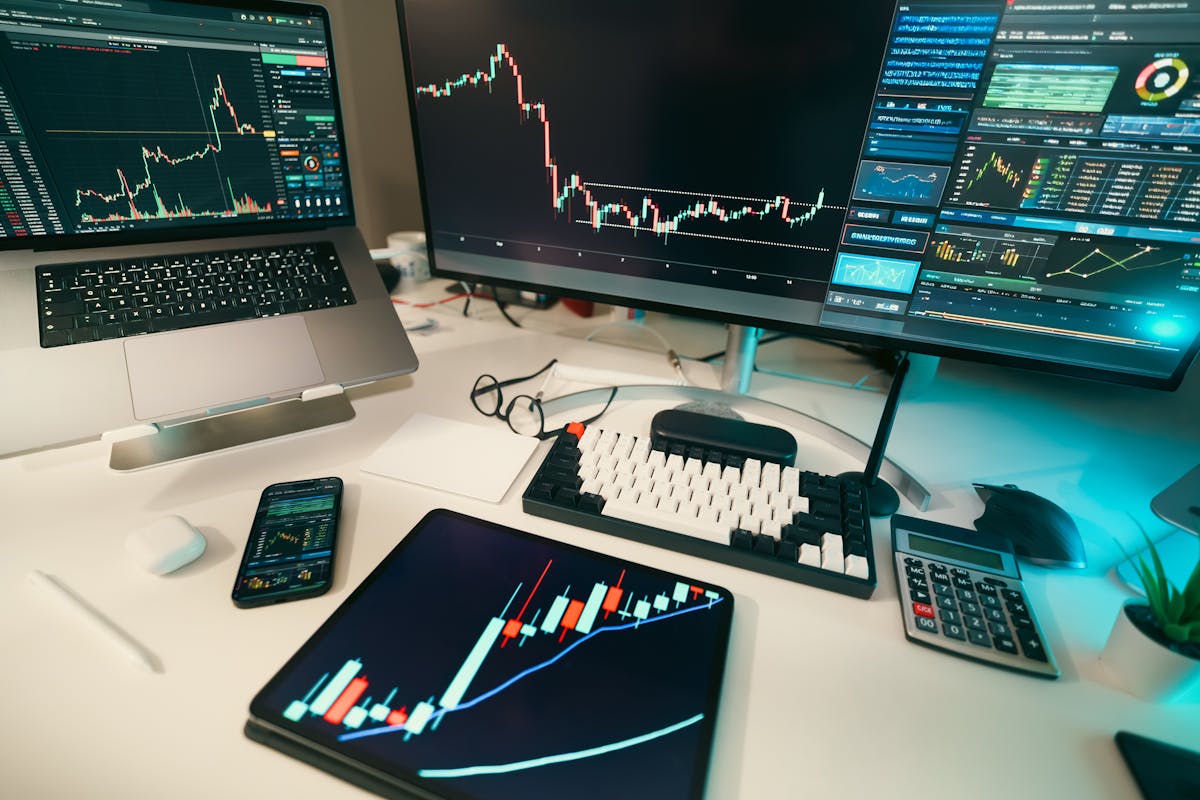
Markets Don’t Sleep, But I Do
There’s a running joke among Solana traders that the best entries happen at 3 AM. And honestly? They’re not wrong. The crypto market is a 24/7 machine that doesn’t care about your sleep schedule, your weekend plans, or the fact that you promised yourself you’d stop checking your phone in bed.
I’ve been trading memecoins full-time for a little over a year now. Not the “I bought BONK early and retired” kind of full-time. The boring kind. The kind where I wake up at the same time every day, run through the same checklist, and say no to 95% of what I see. The kind where routine is the edge — not some secret alpha group or paid Telegram channel.
I want to walk you through exactly what my mornings look like, because I think most people get this wrong. They think trading is about finding the next 100x. It’s really about not losing money on the other 99 attempts. And that starts with how you begin your day.
5:30 AM — What Happened While I Slept
My alarm goes off at 5:30. No snooze. I learned the hard way that the first 90 minutes of my day set the tone for every trade I make, so I treat this like a job — because it is one.
Before I even get out of bed, I grab my phone and check three things:
- Solana price action overnight. If SOL moved more than 3-4% in either direction while I slept, the memecoin landscape has shifted. A big SOL pump usually means new money flowing into the ecosystem, which means more token launches and more volume across the board. A dump means tighter stops and smaller position sizes today.
- My real-time token alerts. I set alerts before bed for tokens I’m watching — specific price levels, volume spikes, or holder count thresholds. Overnight alerts tell me whether my watchlist tokens are still in play or if I missed the move entirely.
- Crypto Twitter sentiment. A quick 2-minute scroll. Not for alpha — most “alpha” on Twitter is already priced in by the time you see it. I’m looking for narrative shifts. Did a new meta emerge overnight? Is everyone suddenly talking about AI agents again, or did some new category of token start trending?
This whole check takes maybe 10 minutes. Then I make coffee. That part is non-negotiable.
6:00 AM — The Morning Scan
This is the real work. I sit down at my desk with coffee, open my TokenRadar dashboard, and start filtering through everything that launched in the last 8-12 hours.
Here’s the reality most new traders don’t appreciate: hundreds of new Solana tokens launch every single day. On a busy day, it can be over a thousand. Most of them are outright scams. Many more are low-effort copies that will never gain traction. Somewhere in that ocean is maybe one or two tokens worth looking at seriously.
Without a proper memecoin screener, you’re just scrolling through noise. I used to do this manually — checking PumpFun, scanning DexScreener, flipping between ten browser tabs. It was exhausting and I still missed things. Now I use a solana memecoin tracker that aggregates everything in one place and lets me filter by the metrics that actually matter.
My morning scan filters:
- Age: I focus on tokens that are 1-6 hours old. Too new and there’s no data to analyze. Too old and the early move is probably done.
- Holder count growth: I want to see organic holder growth, not just 20 wallets that all bought in the same block. A healthy token should be adding holders steadily.
- Volume relative to market cap: High volume relative to cap means active interest. Low volume means nobody cares, even if the chart looks nice.
- Social presence: Does it have a real website? Active social accounts? Or just a ticker and a dog picture?
Out of maybe 200-300 tokens that passed through overnight, I’ll usually narrow it down to 5-10 that are worth a closer look. That’s a normal ratio. If I’m finding more than that, I’m probably not being selective enough.
6:30 AM — Safety Checks
This is where most traders skip ahead and lose money. They see a token pumping, the chart looks good, and they ape in without doing basic safety checks. I’ve been burned enough times to know better.
For every token that made it through my morning scan, I run through a safety checklist that covers the fundamentals:
- Mint authority: Is it revoked? If the mint authority is still active, the creator can print more tokens and dilute your position to zero. This is a non-negotiable for me — if mint authority isn’t revoked, I don’t touch it.
- Freeze authority: Same deal. If freeze authority is active, someone can freeze your tokens in your wallet. You literally cannot sell. Pass.
- Top holder concentration: If one wallet holds 15%+ of supply (outside of known liquidity pools), that’s a red flag. I’ve watched too many tokens rug when a top holder decides to dump.
- Liquidity lock status: Is the liquidity locked, and for how long? Unlocked liquidity means the deployer can pull it at any time.
- Contract verification: Does RugCheck flag anything unusual? I always cross-reference with at least one auditing tool.
If you want to go deeper on any of these checks, I wrote a more detailed guide on how to actually DYOR on crypto tokens that covers the full research process. But even just running through those five bullet points will save you from most scams.
A good memecoin screener will surface some of this data automatically — flagging tokens with risky authority settings or suspicious holder distributions. That’s one of the reasons I rely on automated tools now instead of manually checking everything on a block explorer. When you’re scanning dozens of tokens before breakfast, you need that information surfaced quickly.
Out of my 5-10 candidates, usually 2-3 survive the safety check. The rest had some red flag that disqualified them. And that’s fine. Better to miss a winner than to catch a rugpull.
7:00 AM — Setting Alerts and Building the Watchlist
By 7 AM, I have my shortlist. These are tokens that passed both my scan and my safety checks. But here’s the thing — I almost never buy at 7 AM. The morning scan is about preparation, not execution.
For each token on my shortlist, I set up real-time token alerts at specific levels:
- Volume alerts: If 5-minute volume spikes above a threshold I set, I want to know immediately. A sudden volume spike often precedes a big move.
- Price alerts: I identify key levels — previous resistance that might become support, round numbers, or levels where I think buyers might step in.
- Holder milestone alerts: If a token crosses 500, 1000, or 2000 unique holders, that’s a signal of growing organic adoption.
I also check what’s happening on PumpFun specifically, because tokens that graduate from PumpFun’s bonding curve and migrate to Raydium often get a second wave of attention. If one of my watched tokens is approaching migration, I pay extra attention.
The whole point of a solana memecoin tracker with good alerting is that you don’t have to stare at charts all day. You set your levels, you set your alerts, and you go live your life until something triggers. That was a game-changer for me mentally. In my first few months of trading, I was glued to my screen 14 hours a day. Now I might actively trade for 2-3 hours and spend the rest of the time just monitoring alerts.
The Midday Check-In
Around noon, I do a shorter version of my morning scan. This takes maybe 20 minutes. I’m looking at:
- How my watchlist tokens performed through the morning session
- Whether any new Solana tokens launched during peak US hours that look interesting
- Overall market sentiment — has the mood shifted since morning?
- Any positions I’m in — do my stop losses need adjusting?
The midday check is also when I review any trades I took in the morning. I keep a simple spreadsheet where I log every trade: entry, exit, reasoning, and whether I followed my rules. If I deviated from my routine — FOMO’d into something, skipped a safety check, sized too big — I write that down too. You can’t fix what you don’t track.
Some of the best memecoin tracking tools now include portfolio features that make this review process easier, but even a basic spreadsheet works. The point is to be honest with yourself about what you did and why.
The Routine Nobody Talks About: When to NOT Trade
Here’s the part that doesn’t make for exciting content but is probably the most valuable thing I can share: knowing when to sit on your hands.
There are days when my morning scan turns up nothing interesting. Zero tokens pass my filters. The market is choppy, volume is low across the board, and the new Solana tokens launching are all low-effort copies of whatever meta was trending yesterday. On those days, I don’t trade. Period.
This was the hardest lesson for me to learn. When you’re a full-time trader, not trading feels like not working. It feels like you’re falling behind, missing opportunities, wasting the day. But the math is brutally clear: forced trades are losing trades. Every time I’ve told myself “I need to find something today,” I’ve ended the day worse off than if I’d just gone for a walk.
My rule is simple: if nothing screams at me by 10 AM, I close the charts and do something else. I’ll still check my real-time token alerts if something pings, but I’m not actively hunting. Some of my most profitable weeks have included 2-3 days where I made zero trades.
The same applies to emotional states. If I’m stressed about something personal, if I slept badly, if I’m frustrated from a loss the day before — I either reduce my position sizes by half or I don’t trade at all. The market will be there tomorrow. Your capital won’t if you make dumb decisions when you’re not thinking clearly.
Why Routine Beats “Alpha”
I want to end with something that might sound counterintuitive for the memecoin space, where everything is chaos and speed and “who saw it first.”
The edge in this market isn’t information. Not anymore. When a token starts trending, thousands of people see it at roughly the same time. The solana memecoin tracker tools are good enough now that no one has a meaningful information advantage for more than a few minutes. If your strategy depends on seeing something before everyone else, you’re competing with bots that will always be faster than you.
The real edge is behavioral. It’s having a process that prevents you from doing the dumb things that lose money. It’s waking up at the same time, running the same scans, applying the same safety checks, and having the discipline to walk away when conditions aren’t right.
Every profitable trader I know — not the ones who got lucky once, but the ones who consistently make money month after month — has some version of this routine. The specifics vary. Some start earlier, some focus on different metrics, some use different tools. But they all have a system, and they all stick to it.
I’m not going to pretend my routine is perfect. I still make mistakes. I still occasionally FOMO into something at 11 PM because someone I follow posted a chart that looked too good. But those mistakes happen less often now, because the routine creates guardrails. It turns trading from a series of emotional reactions into a repeatable process.
If you’re getting into new Solana tokens and memecoin trading, the unsexy truth is this: build a morning routine before you build a position. Figure out your scan, your filters, your safety checks, and your alert system. Decide in advance what conditions need to be true before you risk money. Write it down. Follow it even when — especially when — you don’t feel like it.
The 100x screenshots on Twitter are survivorship bias. The traders who actually make it are the ones who showed up every morning, ran their memecoin screener, did their homework, and had the patience to wait for the right setup. It’s not glamorous. But it works.