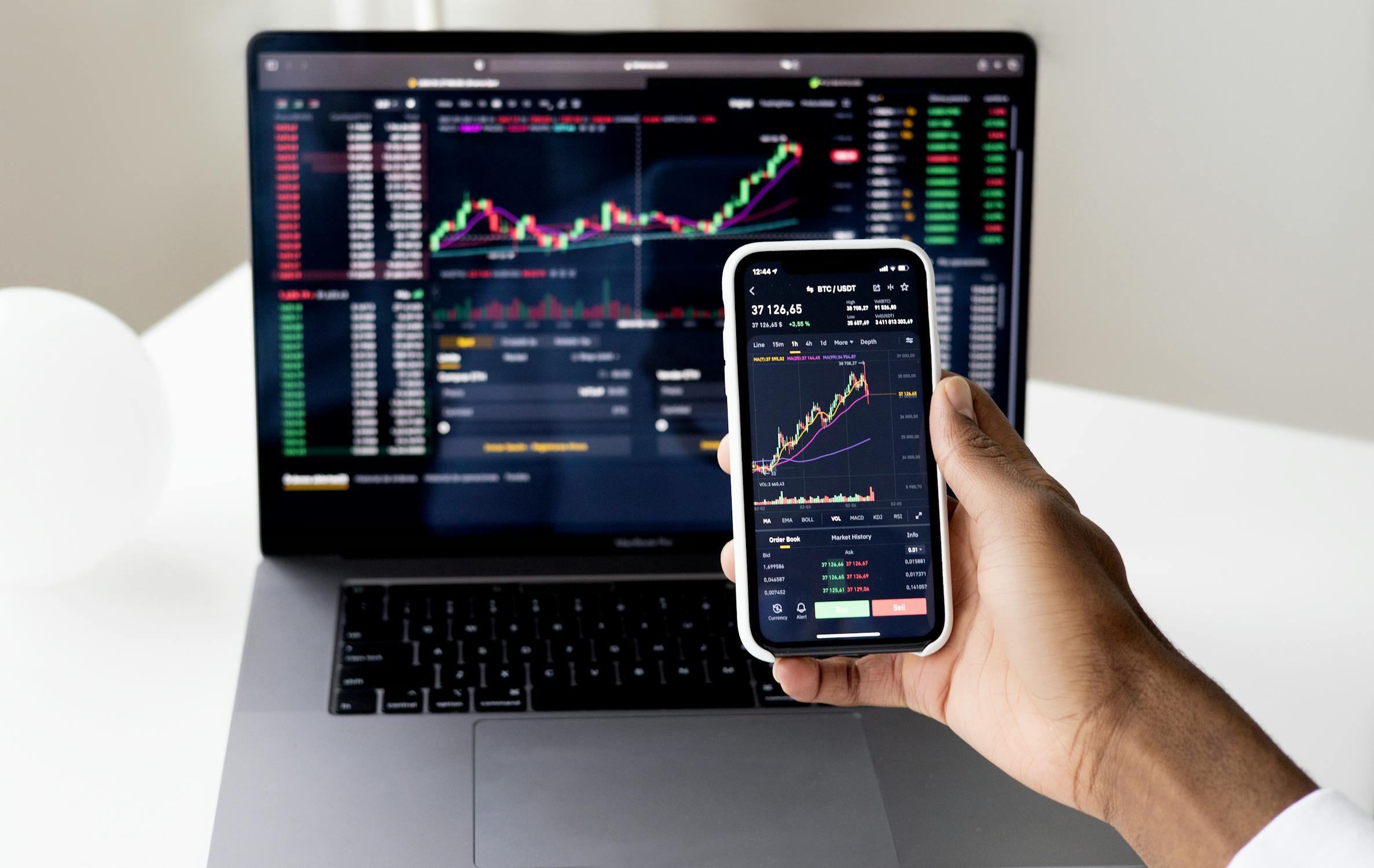
Two tokens launch within minutes of each other on PumpFun. Both hit a $500K market cap. Both have charts that look aggressively bullish — steep green candles, growing volume, price breaking through round numbers. By every surface metric, they look identical.
Six hours later, one of them is sitting at a $3M market cap with 2,000 holders and an active community. The other is at $12K with four holders and a dead Telegram. Same chart shape at the start. Completely opposite outcomes.
The difference? One was a coordinated pump. The other was organic growth. And if you can’t tell them apart in real time, you’re going to keep getting burned. This is maybe the most valuable skill you can develop as a memecoin trader, and it’s something very few people talk about clearly.
What a Coordinated Pump Looks Like
Let’s start with the fake version, because once you see the mechanics behind it, you’ll start noticing it everywhere.
A coordinated pump usually involves a small group — sometimes just 2-3 people, sometimes a Telegram group of 50+ — who plan to buy a token simultaneously to create the appearance of organic momentum. The goal is to attract uninformed buyers who see the price rising and FOMO in, allowing the original group to sell at a profit.
Here’s what it looks like on-chain and on the chart:
The chart signature
A pump typically starts with a sudden, near-vertical price spike that happens in a very short time window. Not a gradual climb — a sharp, aggressive move. The candles are large, uniform, and appear in rapid succession. It looks exciting. It’s designed to look exciting.
After the initial spike, you’ll usually see one of two patterns: either the price holds at an artificial level for 10-20 minutes while the group tries to attract more buyers (a “shelf”), or it immediately starts bleeding as the pumpers take profit. Either way, the initial move was manufactured.
The volume signature
This is where it gets interesting. During a pump, volume spikes dramatically at the start and then drops off quickly. It’s front-loaded because all the coordinated buying happens at once. Compare this to organic growth, where volume tends to build gradually and sustain itself.
Another telltale sign: the buy/sell ratio during the spike is overwhelmingly one-sided. Real markets have a mix of buyers and sellers at any given time. A pump is almost entirely buys for a concentrated window, followed by almost entirely sells. It’s unnatural, and if you look at the order flow, it’s obvious.
The holder signature
Check the holder distribution during a pump and you’ll typically see:
- A cluster of wallets that all bought within seconds of each other
- Similar buy sizes across these wallets (the group members each deploying their allocated amount)
- Many of these wallets were created recently or have very thin transaction histories
- High concentration — 5-10 wallets might hold 40-60% of the circulating supply
If you’re using a memecoin scanner that shows holder data, this pattern stands out immediately. The number of holders might look decent on the surface, but when you dig into the distribution, the concentration tells a different story.
What Organic Growth Actually Looks Like
Now the version you want to find. Organic growth in memecoins is rarer than people think, but it does happen. And it has a distinctive fingerprint that’s very different from a pump.
The chart signature
Organic growth is messy. The chart doesn’t go straight up — it climbs in waves. You’ll see a run-up, then a pullback as early buyers take some profit, then another run-up that goes higher than the first. It looks like a staircase with uneven steps, not a rocket launch.
The key visual difference: organic charts have healthy red candles mixed in with the green ones. Real markets have sellers at every level. If a chart is all green with no meaningful pullbacks, something artificial is holding the price up.
Another difference is the speed. Organic growth tends to unfold over hours, not minutes. A token might steadily climb over the course of an afternoon as word spreads through Twitter, then Telegram, then Discord. Each new wave of discovery brings new buyers, which creates the staircase pattern.
The volume signature
Organic volume builds. Instead of a massive spike followed by a cliff, you see volume increasing gradually as more people discover the token. The volume often comes in waves that correspond to social catalysts — a tweet goes viral, a popular caller mentions it, someone posts a chart in a group chat.
Importantly, organic volume sustains. Even during pullbacks, volume remains reasonably active because both buyers and sellers are engaged. In a pump, volume evaporates the moment the coordinated buying stops. In organic growth, it continues because real interest exists.
The holder signature
This is where organic growth is most clearly distinguishable:
- New holders arrive continuously over hours, not all at once in a burst
- Buy sizes are varied — some small, some medium, some large — reflecting different types of traders finding the token independently
- Wallets have diverse histories, not freshly created
- Distribution is more even — no small cluster of wallets dominates the supply
- The holder count keeps growing even during price dips
This last point is especially important. During a pump, the holder count plateaus or declines after the initial spike because nobody new is discovering the token organically. During real growth, the holder count is a steady upward line.
The Gray Area: Pumps That Become Organic
Here’s where it gets tricky. Sometimes a token starts as a pump but transitions into organic growth. This happens when the initial coordinated buying attracts enough real attention that a genuine community forms around the token.
Think of it like a fire. The pump is the lighter fluid. If there’s no kindling (meme potential, community appeal, narrative), the fire goes out the moment you stop squirting lighter fluid. But if the token has something genuinely interesting or funny about it, the lighter fluid can ignite real kindling, and the fire sustains itself.
These transitions are some of the best trading opportunities because most traders who recognize the initial pump will avoid the token, meaning less competition for entry when the organic phase begins. Here’s how to spot the transition:
- The first pullback holds above 50% of the pump move. If the token pumps from $50K to $500K market cap and then pulls back to $300K and holds — with new holders still entering during the dip — that’s a sign real demand exists beyond the original pumpers.
- Social activity becomes decentralized. During the pump, chatter is concentrated in one group. If you start seeing unprompted mentions from unrelated accounts across different platforms, organic discovery is happening.
- Volume stabilizes rather than crashing. After the pump, if volume settles at maybe 40-50% of the peak rather than dropping to near zero, real trading interest exists.
Understanding this transition is related to what I’ve written about the lifecycle of a Solana memecoin. The tokens that make it through multiple phases are the ones where organic interest takes over from the initial catalyst, whatever that catalyst was.
Practical Detection Framework
Here’s the actual process I go through when I see a token pumping and need to decide quickly whether it’s real or manufactured.
Step 1: Check the age (5 seconds)
How old is this token? If it launched 3 minutes ago and is already at a $200K market cap, that’s almost certainly snipers and bots, not organic interest. Organic growth needs time to develop. Give a token at least 15-20 minutes before even considering it.
Step 2: Look at the holder chart (10 seconds)
Is the holder count growing steadily, or did it spike and flatline? Open your token tracker and check the distribution. If the top 10 wallets hold more than 50%, you need a very good reason to enter.
Step 3: Check social channels (30 seconds)
Search Twitter for the token name or contract address. Are you finding multiple unrelated accounts talking about it, or is it one person shilling with a bunch of bot replies? Check if there’s a Telegram or Discord. Is there actual conversation, or is it just “LFG” and rocket emojis from accounts that joined minutes ago?
Step 4: Watch one cycle (2-5 minutes)
Don’t buy on the first pump you see. Wait for a pullback. What happens during the dip? If new buyers step in and the price recovers, that’s strength. If it just bleeds with no buying interest, the pump is over and you avoided a loss.
Step 5: Compare to the day’s baseline (10 seconds)
How does this token’s volume and holder growth compare to other tokens launched around the same time? If everything else is dead and this one is surging, it’s more likely to be organic interest rather than a market-wide pump group hitting random tokens. Context matters.
This whole process takes under 5 minutes. It won’t catch every pump, and it’ll make you miss some fast-moving plays. That’s fine. The trades you avoid by being slightly more careful will save you more money than the gains you miss by being slightly slower.
Why This Matters More Than You Think
Learning to distinguish pumps from organic growth isn’t just about avoiding losses on individual trades. It fundamentally changes how you see the market.
Once you develop this skill, you start realizing that a significant percentage of the “opportunities” you see on any given day are manufactured. It’s sobering, but it’s also liberating. You stop chasing everything that’s green. You become more patient. You wait for the setups that actually have the characteristics of organic growth, and your win rate improves because you’re playing a different game than the people who buy every chart that’s going up.
The memecoin market is full of noise. Your job as a trader is to filter that noise and find the signal. Understanding the difference between a pump and organic growth is maybe the most powerful filter you can develop.
Tools like TokenRadar can help by surfacing holder data, volume trends, and safety scores alongside price action, so you’re not making decisions based on a chart alone. But the analytical framework — knowing what to look for and what it means — that’s something you build through experience and attention.
Start paying attention to the tokens you didn’t buy. Track the ones you suspected were pumps and see what happened 6 hours later. Track the ones you thought were organic and see if they held. Build your pattern recognition by studying both outcomes. Over time, the difference between a pump and real growth will become obvious to you, and that’s when the game changes.