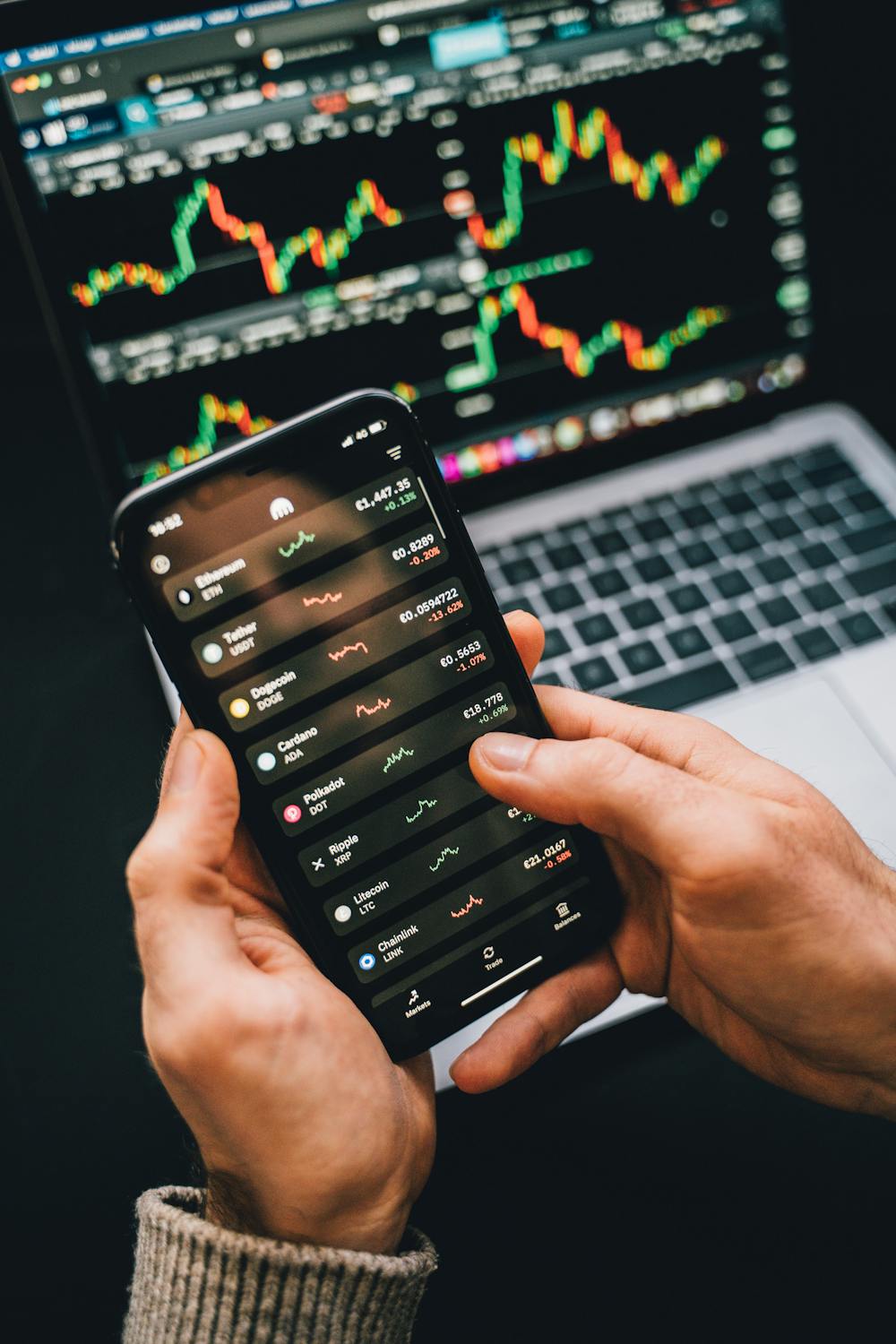
You find a token. You check the safety score, the holders, the chart. Everything looks good. You type in the amount — 2 SOL — and hit swap. A few seconds later, your wallet shows the tokens. Trade complete.
Except it isn’t that simple. Between your click and your tokens arriving, a chain of events unfolded on the Solana blockchain that most traders never see and fewer understand. What happened in those ten seconds determined how much you actually paid, who profited from your transaction before it even settled, and whether you entered at the price you thought you did.
This is the anatomy of those ten seconds. Understanding them won’t make you a better stock-picker. But it will make you a dramatically more informed participant in a game where information asymmetry is the entire playing field.
Second 0: The Transaction Leaves Your Wallet
The moment you confirm the swap in your wallet — Phantom, Solflare, whatever you’re using — your wallet application constructs a Solana transaction. This transaction contains instructions that say, in simplified terms: “Take 2 SOL from my wallet and swap it for Token X through this specific liquidity pool, accepting up to Y% slippage.”
That slippage tolerance is the first thing most people set wrong. Here’s what it actually means:
- 1% slippage: You’ll accept receiving up to 1% fewer tokens than the quoted price. If the quoted price says you’ll get 1,000,000 tokens, you’ll accept as few as 990,000.
- 5% slippage: You’ll accept getting 950,000 tokens instead of 1,000,000.
- 15% slippage: You’re telling the network you’ll accept getting ripped off by up to 15%. In volatile memecoin markets, people sometimes set this high to ensure their transaction goes through. And it costs them dearly.
Your slippage setting is publicly visible to anyone monitoring the Solana mempool. Remember that. It becomes important in about three seconds.
Second 1–2: The Mempool Moment
Your transaction enters Solana’s transaction processing queue. On Solana, this isn’t a traditional mempool like Ethereum’s — transactions are streamed directly to the current block leader (validator). But there’s still a brief window — measured in hundreds of milliseconds to a few seconds — where your pending transaction is visible to certain actors.
Who’s watching?
- MEV bots. Maximum Extractable Value bots monitor incoming transactions in real time. They’re looking for profitable opportunities created by your trade — specifically, the price impact your purchase will create.
- Sandwich bots. A specific type of MEV bot that has become notorious in Solana DeFi. They’re about to try something on your transaction.
- Arbitrage bots. These monitor price differences across pools and pounce when your trade creates a temporary imbalance.
Your 2 SOL buy is not just a trade. It’s a signal. And in the Solana ecosystem, signals get exploited at machine speed.
Second 2–4: The Sandwich (If It Happens)
This is the part that costs traders real money without them ever knowing. A sandwich attack works like this:
- The bot sees your pending buy. It knows you’re about to buy Token X with 2 SOL, and it knows your slippage tolerance.
- The bot buys first. It places its own buy order for Token X right before yours. This pushes the price up slightly.
- Your transaction executes. You buy Token X, but at the now-higher price. You get fewer tokens than you would have without the bot’s front-running buy.
- The bot sells immediately after. It dumps its tokens at the price your buy just pushed it to, pocketing the difference.
The entire sequence — buy, your trade, sell — happens within the same block or consecutive blocks. Milliseconds apart. You never see it happen. Your wallet just shows you received slightly fewer tokens than expected, and you assume it was normal slippage.
How much does this cost you? It depends on your slippage tolerance and the size of your trade:
| Trade Size | Slippage Set | Typical Sandwich Loss | You Receive |
|---|---|---|---|
| 1 SOL | 1% | 0.3–0.8% | Close to expected |
| 2 SOL | 5% | 1–3% | Noticeably less |
| 5 SOL | 10% | 3–7% | Significantly less |
| 10+ SOL | 15% | 5–12% | Much less — you’re the main course |
Setting high slippage on large trades is essentially hanging a sign that says “please take my money.” The bot will extract as much as your slippage tolerance allows.
How to Minimize Sandwich Losses
- Keep slippage as low as possible. Start at 1%. If the transaction fails, increment to 2%, then 3%. Never jump to 10%+ unless you’ve accepted the cost.
- Use anti-MEV features. Jupiter and some other Solana DEX aggregators offer MEV protection that routes your transaction through private channels, reducing visibility to sandwich bots.
- Split large trades. Instead of one 10 SOL buy, do five 2 SOL buys. Smaller trades have lower price impact and are less attractive sandwich targets.
- Use limit orders where available. A limit order executes at your specified price or not at all — there’s nothing to sandwich.
Second 4–6: Price Impact and the Liquidity Reality
Even without MEV bots, your trade changes the price. Every buy pushes the price up. Every sell pushes it down. The magnitude of this price impact depends entirely on liquidity depth.
In traditional markets, a $300 trade (2 SOL) has zero measurable price impact. In a memecoin liquidity pool with $5,000 total liquidity, that same $300 trade can move the price by 3–6%. You’re not just participating in the market — you’re visibly moving it.
This is why the price you see on the chart before clicking “swap” is never exactly the price you get. The chart shows the last traded price. Your trade creates a new price. On low-liquidity memecoins, the difference can be substantial.
What liquidity depth means in practice:
| Pool Liquidity | Your 2 SOL Buy Impact | Implication |
|---|---|---|
| $2,000 | ~8–15% | You moved the market. Everyone after you pays more because of your buy. |
| $10,000 | ~2–4% | Noticeable but manageable. Standard for newer graduated tokens. |
| $50,000 | ~0.5–1% | Minimal impact. This is a mature pool. |
| $500,000+ | ~0.05% | Negligible. Rare for memecoins. |
Before buying any token, check the liquidity depth. On TokenRadar, you can see whether a token is still on PumpFun’s bonding curve (synthetic liquidity, different mechanics) or has graduated to Raydium with a real liquidity pool. Graduated tokens generally have deeper liquidity and lower price impact per trade.
Second 6–8: The Transaction Settles
Solana’s block time is approximately 400 milliseconds. Your transaction, assuming it wasn’t dropped or failed, settles within one to three blocks of being submitted — roughly 0.4 to 1.2 seconds of actual settlement time once the validator processes it.
But the perceived time from your click to seeing tokens in your wallet is longer — usually 3–10 seconds — because:
- Your wallet needs to submit the transaction to a validator
- The validator needs to include it in a block
- Your wallet needs to detect the confirmed transaction and update your balance display
- During high-congestion periods, transactions may need to be retried
If your wallet shows “transaction pending” for more than 10 seconds, the network may be congested. During peak memecoin launches, Solana can experience localized congestion where transactions to popular pools are delayed or dropped. This is frustrating, but it’s also information: if the network is congested around a specific token, it means massive buy volume is hitting that pool simultaneously.
Second 8–10: The Aftermath You Don’t See
Your tokens have arrived. Your wallet shows the new balance. You feel good. But the ripple effects of your transaction are still playing out:
- Arbitrage bots react. If your buy pushed the price on Raydium above the price on another pool (Orca, Meteora, etc.), arbitrage bots will instantly buy the cheaper pool and sell on Raydium, equalizing prices across venues. Your single trade triggers a cascade of balancing trades across the ecosystem.
- Chart updates. Your transaction creates a new data point on the price chart. If you’re a visible buyer (larger than average), chart-watchers notice the green candle and some may follow.
- Holder count increments. If this is your first purchase of this token, the unique holder count increases by one. On a token dashboard like TokenRadar, other traders see this — and holder growth is one of the most important signals they’re monitoring.
- Your wallet is now trackable. On-chain, everyone can see that your wallet bought Token X at this exact time for this exact amount. Copy-trading bots may flag your wallet if you’ve had previous profitable trades. Your privacy is zero.
The Hidden Costs: What Your Trade Actually Cost
Let’s add up the real cost of your 2 SOL memecoin purchase:
| Cost Component | Typical Amount | Notes |
|---|---|---|
| Network fee (transaction fee) | ~0.000005 SOL | Negligible on Solana |
| Priority fee (for faster execution) | 0.0001–0.01 SOL | Higher during congestion |
| Price impact (moving the market) | 1–8% of trade value | Depends on liquidity depth |
| Sandwich/MEV extraction | 0–5% of trade value | Depends on slippage setting |
| Slippage (normal market movement) | 0.5–2% of trade value | Volatile markets = more slippage |
On a 2 SOL trade in a thin liquidity pool with moderate slippage settings, the total hidden cost can easily be 5–10% of your trade value. That means you’re starting every trade 5–10% in the red before the token price moves a single tick in your favor.
This is why position sizing matters so much in memecoin trading. Small positions in low-liquidity pools have lower absolute price impact. And it’s why your exit strategy needs to account for these costs — a 2x return isn’t really 2x when you factor in entry and exit friction.
What You Can Control
You can’t eliminate these costs. They’re structural features of decentralized trading. But you can minimize them:
- Set slippage to the minimum that works. Start at 1% and increase only if the transaction fails. Every percentage point of slippage tolerance is money you’re volunteering to give away.
- Prefer tokens with deeper liquidity. Graduated tokens on Raydium generally offer better execution than bonding curve tokens on PumpFun.
- Use MEV protection when available. Jupiter’s MEV protection feature routes transactions through private channels that reduce sandwich attack exposure.
- Split large orders. Two 1 SOL buys will almost always give you better average execution than one 2 SOL buy in a thin pool.
- Factor friction into your targets. If entry + exit costs total 10%, your breakeven isn’t 0% — it’s +10%. Set your take-profit targets accordingly.
Ten seconds. That’s all it takes. But inside those ten seconds is a financial machine running at computational speed, extracting value at every step. The traders who understand this machine don’t necessarily beat it — but they stop feeding it unnecessarily.
Every lamport saved on execution is a lamport added to your returns. And over hundreds of trades, those lamports compound into the difference between profitable and not.