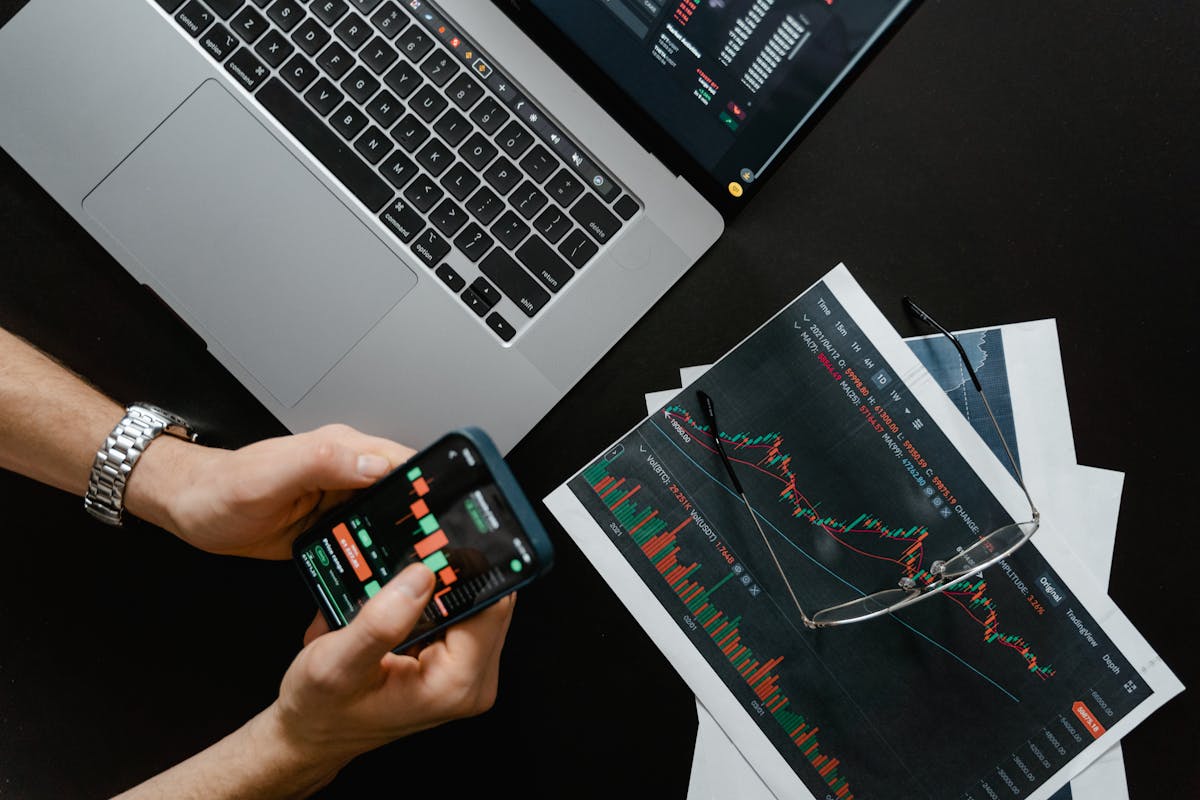
I used to buy tokens based on vibes. A friend would drop a contract address in a group chat, I’d see a green candle on the chart, and I’d ape in within thirty seconds. No research. No checklist. Just adrenaline and the fear of missing out. That approach cost me thousands of dollars over the span of about four months in 2024. Not from one catastrophic loss, but from a slow bleed of rug pulls, dead projects, and tokens that dumped the second I bought in.
The turning point came when I sat down and actually catalogued my losses. Out of roughly forty trades where I went in blind, maybe six were profitable. The rest were either outright scams or tokens with such poor fundamentals that they never had a chance. That’s when I built my checklist — a systematic approach to solana token safety that I run through before every single buy. It takes me about five minutes, and it has saved me more money than any paid alpha group ever did.
Here’s exactly what I check, in the order I check it.
Check 1: Mint Authority and Freeze Authority
This is always the first thing I look at. If the mint authority on a token hasn’t been revoked, the developer can create unlimited new tokens at any time and dump them on your head. It’s that simple. A solana rug check that skips this step isn’t a rug check at all.
Freeze authority is equally important, though people talk about it less. If the freeze authority is still active, the token creator can literally freeze your tokens in your wallet, preventing you from selling. I’ve seen this happen in real time — a token pumps, people try to take profits, and their transactions fail because their accounts have been frozen. By the time the freeze is lifted, the price is zero.
When I run a token through a solana token scanner, these two checks are the first things I look for. Both should show as revoked. If either one is still active, I close the tab. No exceptions. I don’t care how good the chart looks or how many people are talking about it.
For a deeper dive into how these authority exploits work, I’d recommend reading how to spot a rug pull on Solana — it covers the seven most common red flags, including authority-based attacks.
Check 2: Holder Distribution
After I’ve confirmed the authorities are revoked, I look at who actually holds the token. This tells you more about a token’s future than almost anything else.
What I’m looking for is distribution. Healthy tokens have their supply spread across hundreds or thousands of wallets, with no single wallet (other than liquidity pools and known exchange wallets) holding more than about 3-5% of the total supply. When I see a top holder sitting on 15% or 20% of the supply, that’s a ticking time bomb. The moment they decide to sell, the price craters.
But it’s not just about the top wallet. I look at the top ten and top twenty holders combined. If the top twenty wallets control more than 40-50% of the supply (excluding liquidity), the token is too concentrated for me to feel comfortable. One coordinated dump and you’re done.
I also look for suspicious patterns in holder wallets. If the top ten holders all received their tokens in the same block or from the same source wallet, that’s likely one person spreading tokens across multiple wallets to create the illusion of decentralization. Any decent memecoin safety checker will flag this kind of clustering, but it’s worth verifying manually too.
Check 3: Liquidity Depth and Lock Status
Liquidity is the thing that lets you actually sell your tokens when you want to. I’ve seen people buy into tokens with $200 of total liquidity and then wonder why they can’t exit without crashing the price by 80%. Understanding what liquidity really means in crypto is non-negotiable if you’re trading on Solana.
Here’s my personal threshold: I want to see at least $30,000 in liquidity before I put any meaningful amount into a token. For micro-plays where I’m putting in $50-100, I’ll go lower, but I know the risk I’m taking.
More important than the raw number is whether the liquidity is locked. Locked liquidity means the developer can’t pull it out from under you. If liquidity isn’t locked, the developer can remove it all at once — a classic rug pull. I check the lock duration too. A 7-day lock is essentially meaningless. I want to see at least 6 months, preferably a year or more.
The ratio of liquidity to market cap matters as well. A token with a $5 million market cap but only $10,000 in liquidity is a house of cards. I generally look for at least a 1:50 liquidity-to-market-cap ratio as a baseline, though higher is always better.
Check 4: Token Age and Holder Growth Pattern
Fresh tokens aren’t automatically bad, but they require extra scrutiny. I generally prefer tokens that have been live for at least a few hours, because that gives enough time for the initial pump-and-dump crowd to cycle out. If a token is less than ten minutes old, I’m watching, not buying.
What matters more than raw age is the growth pattern. A healthy token shows steady holder growth over time — not a massive spike followed by a plateau. When I see holder count shoot from 0 to 500 in the first five minutes and then flatline, that usually means the initial hype has already peaked and I’d be buying someone else’s exit liquidity.
The best setups I’ve found are tokens where holder count keeps climbing organically over the first few hours, with small dips and recoveries along the way. That pattern suggests genuine interest, not a coordinated pump. Using a solana token scanner that tracks holder growth over time, rather than just showing a snapshot, makes a huge difference here.
Check 5: The Chart Pattern
I’m not a technical analysis purist, but I’ve learned a few chart patterns that consistently save me from bad entries.
The first thing I look for is whether the token has already made its big move. If I see a chart that’s gone up 500% in the last hour, I’m almost certainly too late. The best risk-reward entries I’ve found are during consolidation phases — when a token has had an initial pump, pulled back 30-50%, and is now trading sideways with declining volume. That’s when I start paying attention.
I also look at the buy/sell ratio on recent transactions. If the last fifty transactions are mostly sells with occasional small buys, sentiment has shifted and I don’t want to catch a falling knife. Conversely, if I see consistent buying pressure with increasing transaction sizes, that tells me new money is coming in.
Volume is the other thing I watch closely. Price going up on increasing volume is healthy. Price going up on declining volume is a warning sign — it means fewer people are willing to buy at higher prices, and a reversal is likely coming.
Check 6: Community and Social Signals
This is the squishiest part of my checklist, but it still matters. I check whether the token has a website, a Telegram or Discord, and a Twitter/X account. These alone don’t make a token legitimate, but their complete absence is a red flag.
When a community does exist, I look at the quality of conversation. If the Telegram is nothing but rocket emojis, price predictions, and people telling each other to “hold,” that’s not a community — that’s a hype chamber. The tokens that have actually performed well for me long-term had communities where people discussed the project’s utility, debated tokenomics, and occasionally even criticized the team. Real communities have real conversations.
I also check the age and activity of social accounts. A Twitter account created three days ago with 10,000 followers and no engagement history is almost certainly bought. Look for organic growth patterns, genuine interactions, and a post history that extends back more than a week.
The Check Most People Skip: Contract Verification
Here’s one that separates careful traders from everyone else. Most people never look at the actual token contract or run any kind of deeper safety analysis beyond the surface-level checks. But this is where the sophisticated scams hide.
A proper solana rug check goes beyond just looking at authority status. It examines the token’s program for hidden functions, unusual transfer fees, or hardcoded wallet addresses that receive a percentage of every transaction. Some tokens look completely clean on the surface — revoked authorities, decent holder distribution, locked liquidity — but have malicious logic baked into the contract itself.
I use automated tools for this because I’m not a Solana developer and I can’t read Rust. Running tokens through a memecoin safety checker that analyzes contract-level risks has caught things I would have missed entirely on manual review. The Solana token safety checklist is a solid starting point for understanding what to look for at this level.
One thing I’ve learned the hard way: don’t assume that because a token has been live for a few days without incident, it’s safe. Some scam contracts have time-delayed functions that activate after the token hits a certain market cap or holder count. The rug pull isn’t always immediate — sometimes it’s engineered to maximize the damage.
My “Instant Skip” Red Flags
Over time, I’ve compiled a list of things that make me close the tab immediately. No further analysis needed. These have a near-100% correlation with losing money in my experience:
- Mint or freeze authority not revoked. This is non-negotiable. I covered it above, but it bears repeating.
- A single non-LP wallet holds more than 10% of supply. Too much power in one set of hands.
- No liquidity lock, or a lock shorter than 30 days. If the developer isn’t willing to lock liquidity for at least a month, they’re planning to leave before that.
- Token name is a copy of a trending token with a slight misspelling. These are impersonation scams, and they’re everywhere on Solana. If a big token is trending, there will be ten copycat contracts within the hour.
- The Telegram is already full of “when Binance?” messages within the first hour. This is manufactured hype designed to attract unsophisticated buyers.
- Website is a single-page template with no original content. If the team can’t be bothered to build a real website, they aren’t building a real project.
- Airdrop or free token distribution was used to inflate holder count. A thousand holders means nothing if none of them bought in voluntarily.
Every one of these red flags has cost me money at least once. Now they save me money every single day.
Why This Checklist Saves More Money Than Any Alpha Call
I still see people paying $200 a month for “alpha groups” that give them contract addresses to buy. And some of those calls do hit. But here’s what those groups never teach you: how to evaluate what you’re buying. You end up completely dependent on someone else’s judgment, and when they’re wrong — which happens often — you have no framework for cutting losses or avoiding the trade entirely.
My approach to solana token safety isn’t glamorous. It doesn’t promise 100x returns or give you a single “trust me” contract address. What it does is systematically eliminate the tokens that are most likely to lose you money. And in this market, avoiding losses is more valuable than chasing wins.
The math is simple. If you avoid the 30% of tokens that are outright scams, and you avoid the 40% that are poorly structured and doomed to fail, you’re only putting money into the top 30% of opportunities. Your win rate goes up dramatically, even without any alpha edge on which specific tokens will pump.
I run every token through TokenRadar before I buy because it automates most of the checks I’ve described here. The memecoin safety checker catches the authority issues, the holder concentration, the liquidity analysis — all in one place. It’s not the only tool I use, but it’s the starting point for every trade I make now.
Five minutes of research. That’s all this takes. Five minutes between seeing a contract address and deciding whether to buy. In those five minutes, you’ll catch the scams, you’ll spot the weak fundamentals, and you’ll save yourself from the slow bleed of bad trades that no amount of alpha can overcome. The traders who survive in this market aren’t the ones with the best calls. They’re the ones with the best filters.