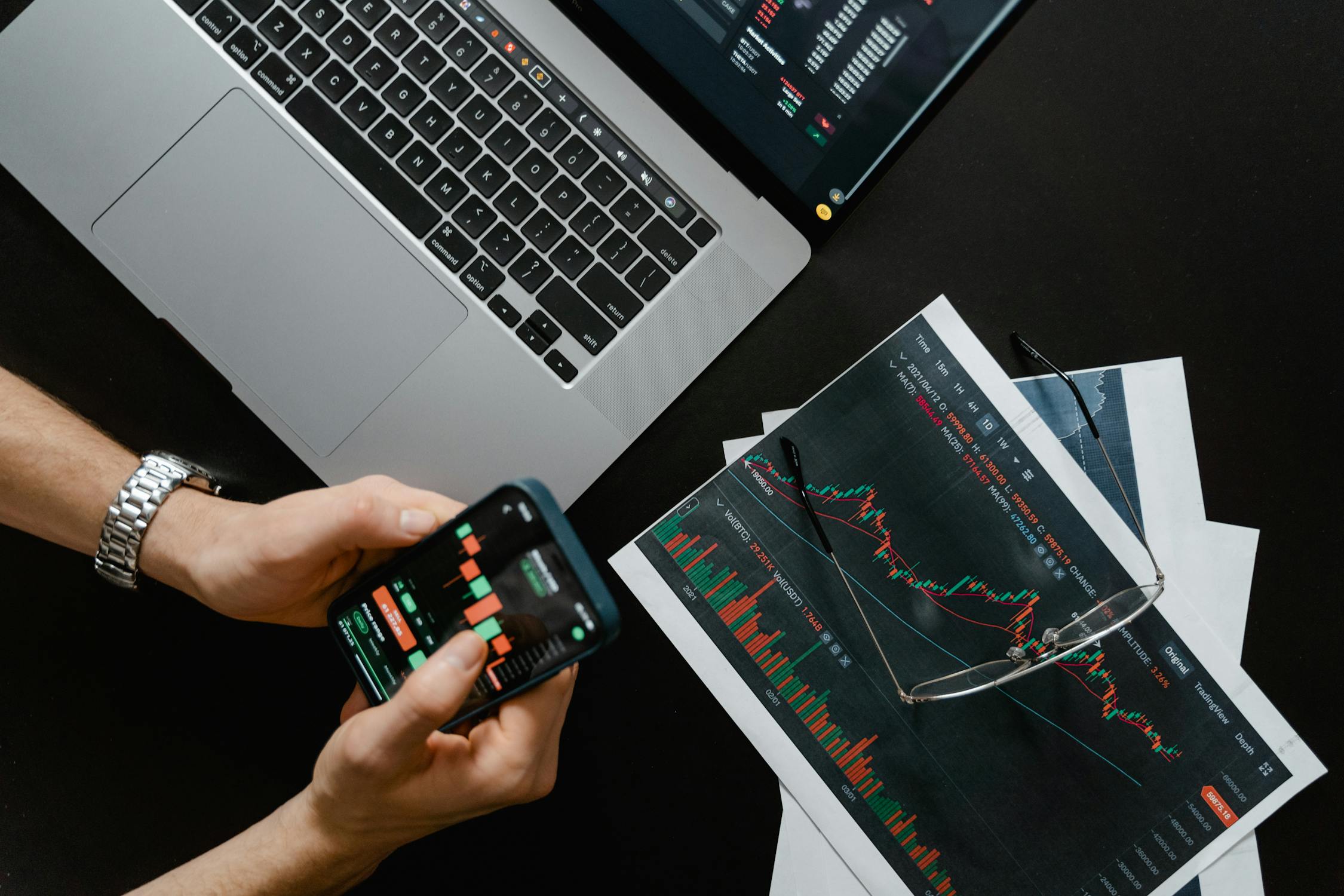
How to Evaluate New Solana Tokens in Under 2 Minutes
A new token just showed up in your feed. The Telegram group is buzzing. The chart is a vertical green line. Your finger is hovering over the buy button, and a voice in the back of your head is saying hurry up or you’ll miss it.
I’ve been in that exact seat hundreds of times. And I can tell you from painful experience: the traders who survive in this space aren’t the fastest clickers. They’re the ones who built a repeatable system for evaluating new Solana tokens before committing a single SOL. A system that takes less than two minutes, every single time.
This is mine. I’m going to walk you through the exact checklist I run, the scoring framework I use, and the instant-kill signals that make me close the tab without a second thought. Whether you’re scanning PumpFun launches or tracking Raydium migrations, this process is the same.
Why 2 Minutes? Why Not 20?
In traditional markets, due diligence can take days. In Solana memecoin territory, the window between launch and parabolic move (or rug) can be minutes. But here’s the thing most people get wrong: speed and safety are not opposites. They’re complements — if you know exactly what to look for.
The goal isn’t to rush. It’s to eliminate waste. Most traders spend their time in the wrong places — scrolling through Telegram comments, staring at the 1-second chart, reading the “lore” on a website that was spun up thirty minutes ago. None of that tells you whether the token is safe. My 2-minute framework focuses only on the factors that actually predict whether you’re about to get rugged.
I use TokenRadar as my primary scanner because it surfaces safety data alongside price action, which cuts the time I’d otherwise spend bouncing between five different tabs. But regardless of what tools you use, the checklist itself is what matters.
The 30-Second Kill: Signs That Mean Instant Pass
Before I even start the full checklist, I run what I call the 30-second kill scan. If any of these are true, I close the tab immediately. No exceptions, no “but the chart looks good.” These are non-negotiable.
- Mint authority is still enabled. This means the deployer can print unlimited tokens at any moment, diluting your position to zero. Absolute deal-breaker. If a solana rug check tool shows active mint authority, walk away.
- Freeze authority is still enabled. The deployer can freeze your tokens in your wallet, making them impossible to sell. This is the on-chain equivalent of having your exit door locked.
- Top wallet holds more than 30% of supply. Unless it’s a clearly labeled burn address or liquidity pool, a single wallet owning a third of the supply is a ticking time bomb.
- Liquidity is under $5,000. At this level, even a modest sell order will crater the price. You’re not trading — you’re gambling on finding someone to hold your bag.
- No social presence whatsoever. No Twitter, no Telegram, no website. A token with zero outward-facing effort is either a test deploy, a bot-generated rug, or abandoned.
If you want to go deeper on these red flags, I wrote an entire breakdown in How to Spot a Rug Pull on Solana: 7 Red Flags Every Trader Must Know. But for the purposes of this 2-minute check, any single kill signal means you move on. There are hundreds of new launches every day. You don’t need this one.
The 2-Minute Checklist: 5 Factors, Scored
If the token survives the 30-second kill, it earns the right to a full evaluation. Here are the five factors I check, in order, and roughly how long each takes.
Factor 1: Mint & Freeze Authority (15 seconds)
You already glanced at this in the kill scan, but now you’re looking more carefully. The ideal state is both authorities revoked (renounced). Some tokens have mint authority still technically present but assigned to a dead address or a known program — that’s usually fine but worth noting. Use a memecoin safety checker or read the on-chain data directly through a block explorer.
I covered how to read this data on Solscan step-by-step in How to Read Solscan Like a Pro — it’s worth bookmarking if you’re doing this manually.
Factor 2: Holder Distribution (20 seconds)
Pull up the top holders list. What you want to see is a gradual curve — no single wallet dominating, a healthy spread across dozens or hundreds of addresses. What you don’t want: a handful of wallets controlling 60%+ of circulating supply.
Watch for clusters too. Five wallets each holding 8% might look fine individually, but if they were all funded from the same source wallet, that’s a coordinated position. Most basic tools won’t catch this, but it’s worth a quick check on the deployer’s transaction history.
Factor 3: Liquidity Depth (15 seconds)
Liquidity isn’t just about the total dollar amount locked. It’s about depth relative to market cap. A token with $50K market cap and $20K liquidity is far healthier than one with $500K market cap and $15K liquidity. I generally look for at least a 1:5 ratio of liquidity to market cap, and ideally better than 1:3 for very new tokens.
Also check whether liquidity is locked or burned. Unlocked LP tokens mean the deployer can pull liquidity at any moment. Locked is good. Burned is better.
Factor 4: Deployer History (30 seconds)
This is the one most people skip, and it’s arguably the most valuable. Look at the wallet that deployed the token contract. Has it deployed other tokens before? If yes, what happened to them? A deployer with a graveyard of zero-liquidity tokens behind them is a massive red flag.
Conversely, a deployer who has launched tokens that went on to hold value and build community — even if they’re small — is a positive signal. Past behavior is the best predictor of future behavior, on-chain and off.
For a deeper framework on evaluating the first minutes after a token launches, see The First 10 Minutes After a Token Launch on PumpFun.
Factor 5: Social Presence & Community (30 seconds)
Last check. Open the token’s Twitter (if it exists), Telegram, and website. You’re not reading every post — you’re looking for signals of effort and authenticity. A Twitter account created the same day as the token with 12 followers and only retweets? That’s a prop. A Telegram group that’s all bots spamming “LFG”? Also a prop.
What you want: evidence that someone is actually building something, even if it’s small. Original content, a roadmap (even a rough one), engagement that feels human. This doesn’t guarantee success, but it dramatically reduces the probability of a straight rug.
The Scoring Table
I score each factor as Green, Yellow, or Red. Here’s how I map the results:
| Factor | Green (Safe) | Yellow (Caution) | Red (Danger) |
|---|---|---|---|
| Mint/Freeze Authority | Both revoked | One revoked, one assigned to known program | Either still active under deployer control |
| Holder Distribution | Top wallet <10%, smooth curve | Top wallet 10-20%, some clustering | Top wallet >20%, obvious insider wallets |
| Liquidity Depth | Locked/burned, >$20K, ratio better than 1:5 | Locked, $5K-$20K, ratio 1:5 to 1:10 | Unlocked, <$5K, or ratio worse than 1:10 |
| Deployer History | Clean history, past tokens with sustained value | No prior deploys (fresh wallet) | Graveyard of dead tokens, known scammer links |
| Social Presence | Active community, original content, real engagement | Exists but minimal effort, few followers | No socials, bot-filled groups, or copied content |
How to Read Your Score
- 5 Greens: Rare, but when it happens, this is a strong candidate. Proceed with a position size you’re comfortable with.
- 3-4 Greens, rest Yellow: Decent setup. Use a smaller position and set a stop or mental exit point.
- Any Reds: One Red is a warning. Two or more Reds and I’m out, regardless of how many Greens there are. A single Red in Mint/Freeze Authority or Deployer History is enough to kill the trade entirely.
- Mostly Yellows: Not a pass, not a fail — but the risk/reward doesn’t justify it when there are cleaner setups available. I skip these.
I built a mental shorthand for this: one Red in the wrong place is worse than five Yellows everywhere. Authority and deployer issues are structural. Bad holder distribution or thin liquidity can improve over time. Structural problems don’t fix themselves.
What Good vs. Bad Looks Like: Real Patterns
Let me paint two pictures so you can recognize them instantly.
The Clean Token
Both authorities revoked. Top holder at 4.2%, next ten wallets each between 1-3%. Liquidity at $35K, locked for 6 months, market cap sitting at $120K. Deployer wallet has two previous tokens — one is still trading at $80K market cap, the other faded but wasn’t rugged. Twitter account is 3 days old but has 40 original posts, some with genuine replies. Telegram has 200 members with actual conversation happening.
That’s 5 Greens. I’m not saying it’ll 10x. I’m saying the chance of getting rugged is low, and that’s all my checklist is designed to measure.
The Trap
Mint authority “revoked” but freeze authority still enabled (most people only check mint). Top 3 wallets hold 45% combined, and two of them were funded from the same wallet 20 minutes before launch. Liquidity is $8K but unlocked. Deployer has created 11 tokens in the past week — all dead within hours. Website is a single-page template with a stock photo of a Shiba Inu.
Every experienced trader has seen this exact profile. It’s a textbook rug. But when the chart is doing a 5x in real-time and the group chat is full of rocket emojis, you’d be surprised how many people bypass their own process. Don’t be that person.
For a quick-reference version of green and red flag patterns, check out Red Flags & Green Flags: Read a Memecoin in 60 Seconds.
After the 2-Minute Check Passes: What Comes Next
So the token scored well. You’re ready to take a position. Now what?
- Size your position conservatively. Even a 5-Green token can fail for reasons that have nothing to do with safety — market conditions, whale exits, narrative shifts. I never allocate more than 2-5% of my active trading capital to a single new token, no matter how clean it looks.
- Set your exit strategy before you buy. Decide on a take-profit target and a stop-loss level. Write them down. Literally. The moment you’re in a position, emotion takes over. Having a pre-committed plan is the only antidote.
- Monitor for changes in your checklist factors. Holder distribution shifts. Liquidity can be pulled if it wasn’t locked. New tokens from the same deployer might appear. The 2-minute check is a snapshot in time — you need to recheck the fundamentals at least once in the first hour. A good memecoin safety checker like TokenRadar can help you stay on top of this without manually refreshing block explorers.
- Document your results. Keep a simple log: token, date, your 5-factor score, entry price, outcome. After 50 entries, you’ll start seeing which factors are most predictive for your trading style. My data shows deployer history is the single most correlated factor with whether a token survives its first 24 hours.
- Don’t add to a losing position. If the token dumps 40% in the first 15 minutes after your entry despite a clean checklist, that’s new information. Re-run the check. If anything changed (liquidity pulled, big wallets exiting), cut the loss. Averaging down on new Solana tokens is how small losses become catastrophic ones.
For a more comprehensive post-purchase monitoring framework, I wrote What I Check Before Buying Any Solana Token which goes deeper into the ongoing due diligence process.
The Framework in 60 Seconds (Quick Reference)
If you remember nothing else from this post, remember this sequence:
- Kill scan (30 sec): Mint authority? Freeze authority? Top holder over 30%? Liquidity under $5K? Zero socials? → Any yes = instant pass.
- Full check (90 sec): Score 5 factors Green/Yellow/Red → Authority, Holders, Liquidity, Deployer, Social.
- Decision rule: Any Red in Authority or Deployer = no trade. Two or more Reds anywhere = no trade. Mostly Yellow = skip. 3+ Green = consider entry.
That’s it. Two minutes, five factors, a clear decision. No ambiguity, no overthinking, no FOMO-driven impulse buys.
Final Thought
The irony of trading new Solana tokens is that the people who move the slowest often make the most money. Not because they’re late — but because they’re still in the game six months later. The fast, reckless traders get spectacular wins occasionally, but the math of repeated exposure to rugs and scams grinds them to zero eventually.
A solana rug check isn’t just a safety step. It’s a survival strategy. Build your 2-minute habit, stick to the scoring system, and you’ll find yourself on the right side of the odds far more often than not.
If you want to keep refining your process, bookmark the Solana Token Safety Checklist — it’s the most comprehensive version of everything I’ve covered here and more.
Stay sharp out there.