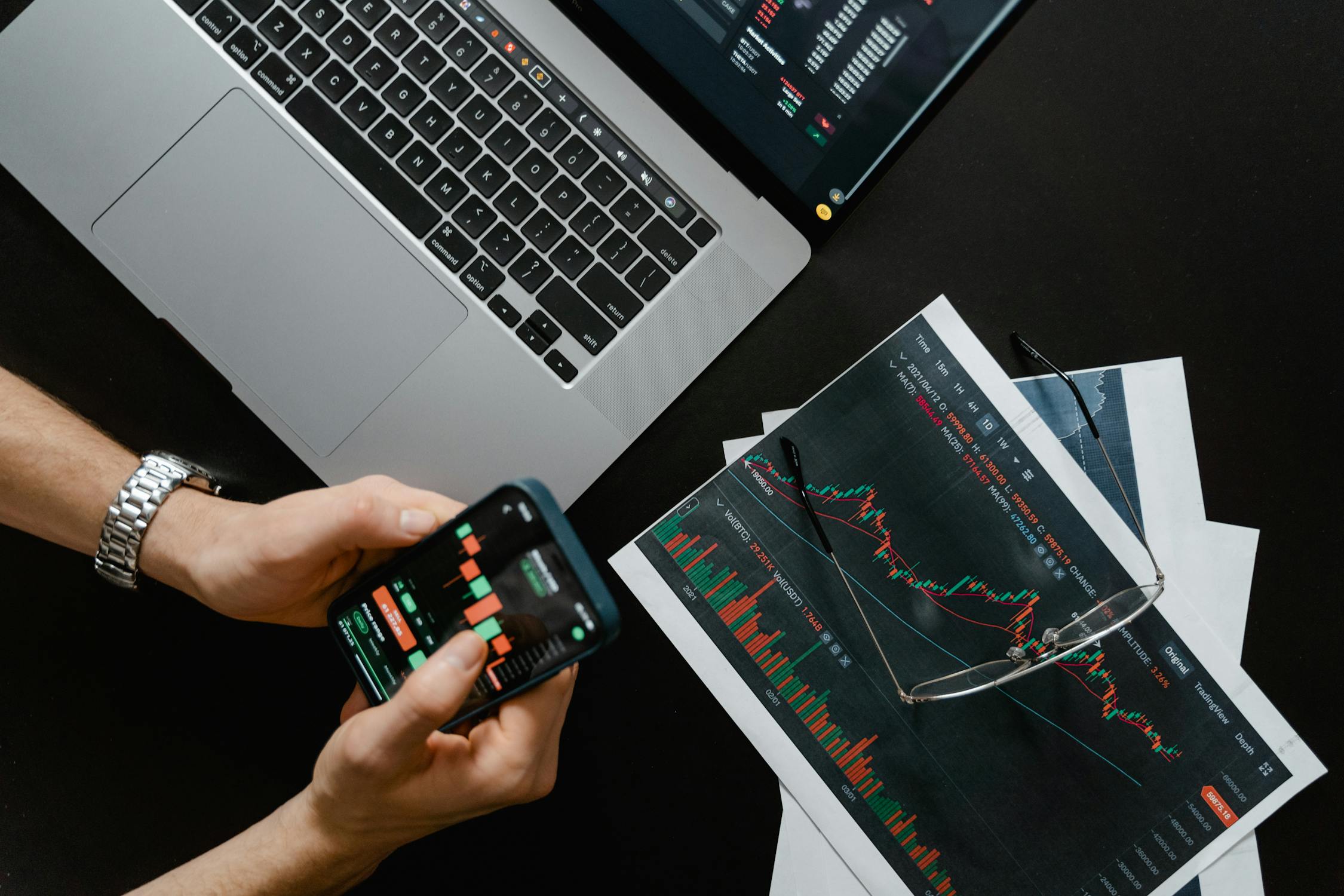
I Was Bleeding SOL Before I Discovered Paper Trading
By mid-January 2026, I had lost 11.4 SOL in exactly 23 days of memecoin trading. That is not a typo. Twenty-three days, forty-seven trades, and a net loss that made me seriously question whether I belonged anywhere near a Solana wallet. The worst part was not the money. It was the pattern I could not see while it was happening: I was making the same three mistakes over and over, convinced each time that this trade was different.
On January 19th, after a particularly painful 2.8 SOL loss on a token that rugged within eleven minutes of my buy, I closed my wallet and opened a spreadsheet. What followed was 30 days of paper trading that completely rebuilt how I approach memecoins. This is the full story of how I practiced without risking a single real SOL, what I learned, and why I believe every new memecoin trader should do the same before putting real money on the line.
What Paper Trading Actually Is (And What It Is Not)
Paper trading is simulated trading. You track hypothetical buys and sells using real market prices, but no actual money changes hands. The concept has been around for decades in stock and futures markets, but it is surprisingly underused in the memecoin space, where people routinely throw 1-5 SOL at tokens they discovered thirty seconds ago.
Here is what paper trading is not: it is not a game, and it is not a shortcut. If you treat it like play money with no consequences, you will learn nothing. The entire value comes from treating every simulated trade as if your real SOL is on the line. That means logging your reasoning, tracking your emotions, and following every rule you plan to use when you go live.
If you are brand new to the memecoin world, I wrote about my earliest experiences in my first month trading Solana memecoins. The mistakes I describe there are exactly the ones paper trading helped me fix.
How I Set Up My Paper Trading System
I tried two approaches before settling on one that worked. The first was a simple notes app where I jotted down buys and sells. That lasted two days before it became an unreadable mess. The second was a complex Notion database with twelve columns. Too much friction; I stopped updating it after day four.
What finally worked was a clean Google Sheets setup with exactly seven columns:
The Spreadsheet Method
| Column | What I Tracked | Why It Mattered |
|---|---|---|
| Date/Time | Timestamp of simulated entry or exit | Revealed my worst trading hours |
| Token | Name, ticker, and contract address | Let me verify the token later |
| Action | BUY or SELL | Simple tracking |
| Price | Real price at the moment I decided | Kept me honest about entries |
| Virtual SOL | Amount I “spent” or “received” | Position sizing practice |
| Reason | Why I entered or exited this trade | Exposed emotional vs. logical decisions |
| Outcome Notes | What happened after (filled in later) | The most valuable column of all |
I started with a virtual balance of 10 SOL. This was close enough to what I would actually trade with that the decisions felt real. I set a hard rule: maximum 0.5 SOL per trade, which forced me to think about position sizing from day one.
Tracking Virtual Buys and Sells With Real-Time Prices
The key to honest paper trading is using real prices at the exact moment you make a decision. No going back and saying “well, I would have bought at that dip.” I used TokenRadar as my solana token scanner to watch new tokens as they appeared, then logged my simulated entry at whatever the price was the instant I decided to buy. For exits, same rule: the price at the moment I made the decision, not the price I wished I had sold at.
I also added a 1% slippage penalty to every trade to simulate real-world conditions. In reality, slippage on low-liquidity memecoins can be much worse, but 1% kept my results slightly conservative without being discouraging.
What 30 Days of Paper Trading Taught Me
I ran my paper trading experiment from January 20 to February 18, 2026. During that time, I logged 94 simulated trades. Here are the numbers:
- Starting virtual balance: 10.0 SOL
- Ending virtual balance: 12.7 SOL
- Win rate: 38 out of 94 trades profitable (40.4%)
- Average winner: +0.31 SOL
- Average loser: -0.14 SOL
- Biggest single win: +1.9 SOL (a PumpFun migration I caught early)
- Biggest single loss: -0.48 SOL (held too long on a clear dump)
A 27% return in 30 days sounds decent, but the real value was not the profit. It was the patterns I discovered in my own behavior.
Lesson 1: I Traded Too Often
In the first week, I averaged 5.2 trades per day. By week four, I was down to 1.8. The reduction was not because I found fewer tokens. My memecoin screener was surfacing just as many opportunities. I was simply getting better at saying no. Of those 94 trades, at least 30 were what I would now call “boredom trades” — entries with no real thesis beyond “this chart looks like it might go up.”
Lesson 2: My Exit Strategy Was Nonexistent
For the first two weeks, I had no plan for when to sell. I would buy a token, watch it climb 40%, feel euphoric, watch it drop back to breakeven, panic, and sell at -5%. This happened eleven times before I finally wrote down exit rules. Once I started using preset targets (take 50% off at 2x, let the rest ride with a trailing stop), my average winner jumped from +0.18 SOL to +0.31 SOL. I have since written an entire guide on memecoin exit strategies based on what I learned during this period.
Lesson 3: Late-Night Trading Was Destroying Me
When I sorted my spreadsheet by time, the data was brutal. Trades placed between 11 PM and 2 AM had a 22% win rate. Trades placed between 9 AM and 3 PM had a 51% win rate. Same person, same tools, same market. The only variable was how tired and impulsive I was. I now have a hard cutoff: no trading after 10 PM, simulated or real.
Lesson 4: I Was Ignoring Safety Checks
Early in my paper trading, I simulated buys on tokens without checking liquidity locks, holder distribution, or contract authority. Seven of those trades would have been outright rugs. Paper trading revealed that skipping safety checks was not saving me time; it was setting me up for catastrophic losses. I started building a pre-buy checklist, which eventually became my full due diligence process.
Common Mistakes I Discovered During Paper Trading
Beyond the four lessons above, paper trading surfaced a series of smaller but significant mistakes that I would never have noticed in real trading because the emotional noise of real money drowns out the signal.
- Revenge trading: After a loss, I would immediately look for another entry to “make it back.” These revenge trades had a 19% win rate in my log.
- Anchoring to entry price: I would refuse to sell at a small loss because I was anchored to my buy price, even when the chart was clearly breaking down.
- Ignoring volume: I bought tokens with impressive price action but almost no volume. In real trading, I would have struggled to exit these positions.
- Chasing pumps: If a token was already up 300%, I would buy in hoping for 500%. These late entries had the worst risk-reward ratio in my entire log.
- Skipping the “reason” column: On days when I did not write down my thesis, my win rate dropped to 28%. On days when I forced myself to articulate why I was entering, it climbed to 49%.
The psychology behind these mistakes is worth exploring in detail. I found this breakdown of memecoin trading psychology extremely helpful in understanding why my brain kept pushing me toward the same bad decisions.
My Week-by-Week Progress
| Week | Trades | Win Rate | Net P/L (Virtual SOL) | Key Adjustment |
|---|---|---|---|---|
| Week 1 (Jan 20-26) | 36 | 30.6% | -0.82 | None yet, gathering data |
| Week 2 (Jan 27 – Feb 2) | 28 | 35.7% | +0.41 | Added exit targets |
| Week 3 (Feb 3-9) | 17 | 47.1% | +1.23 | Pre-buy checklist, no late-night trades |
| Week 4 (Feb 10-18) | 13 | 53.8% | +1.88 | Fewer but higher-conviction trades |
The pattern is clear: fewer trades, better outcomes. By week four, I was trading less than half the volume of week one but generating four times the return. The spreadsheet did not lie.
When to Transition From Paper to Real Trading
This is the question everyone wants to rush to. After 30 days of paper trading, I set three criteria that had to be met before I would use real SOL again:
- Consistent profitability over at least two consecutive weeks. Not every trade needs to win, but the overall trend must be positive. I hit this by weeks three and four.
- A written trading plan that covers entry criteria, position size, exit targets, and maximum daily loss. If you cannot write it down, you do not have a plan.
- Emotional control evidence. This is the hardest to measure. I looked for zero revenge trades in the final week and no trades placed outside my approved hours. I achieved both.
When I finally went live on February 22nd, I started with just 2 SOL instead of my full balance. The transition felt almost boring, which is exactly how it should feel. Paper trading had turned my impulsive gambling into something closer to a process. The move from chaotic trading to structured decision-making is something I explore more in my guide on going from degen to disciplined.
How Paper Trading Builds Discipline and Reveals Bad Habits
The single most valuable thing about paper trading is not the simulated profit or loss. It is the data. When you have 94 trades logged with timestamps, reasons, and outcomes, your bad habits cannot hide. You cannot tell yourself “I am just unlucky” when the spreadsheet shows that 73% of your losses came from trades placed after midnight with no written thesis.
Here is what I recommend for anyone starting their own paper trading period:
- Commit to at least 21 days. The first week will feel pointless. Push through. The patterns do not emerge until week two or three.
- Use a real-time tool to source tokens. Set up real-time token alerts on a proper solana token scanner like TokenRadar so your paper trading mimics the actual speed and information flow of live trading. Practicing with delayed data teaches you nothing useful.
- Log every trade, including the ones you are embarrassed about. Especially those. The trade you do not want to write down is the one you need to study most.
- Review your log weekly. Sort by time, by outcome, by reason. Look for clusters of losses and try to find the common thread.
- Do not skip the slippage simulation. Add at least 1% to every entry and exit. Real trading on Solana memecoins involves fees, slippage, and sometimes failed transactions. Your paper results should be slightly worse than your real results, not better.
The Bottom Line
Paper trading will not make you a perfect trader. Nothing will. But 30 days of honest, disciplined simulation taught me more about my own tendencies than six months of real trading with real losses. I stopped revenge trading. I built an exit strategy. I discovered that my late-night trades were a net negative. And when I finally went live again, I had something I never had before: a plan backed by data.
If you are currently losing money on memecoins, or if you have not started yet and want to avoid the mistakes the rest of us made, close your wallet for a month. Open a spreadsheet. Use a solid memecoin screener with real-time token alerts to source your tokens, just as you would in live trading. Log everything. Be honest. The SOL you save during those 30 days will be the cheapest tuition you ever pay.